Topical maps and clusters
A plan showing the main pages and supporting articles for each subject, and how they link together.
I am Nazirul Islam Nakib, an experienced content SEO expert and SEO strategist in Bangladesh. Publishing more is not a strategy. I plan the topics that build authority in your field, brief them so they answer real questions, and refresh the pages you already have, so content keeps earning traffic month after month.
4.9/5 from 81 reviews · 800+ keywords ranked on one SaaS site
Get a free first look
Send your website. I will reply myself with what I see and what I would fix first.
or
Chat on WhatsAppA good writer makes a page enjoyable to read. A content SEO expert decides which pages should exist at all, what each one has to answer, how it connects to the others and how it should be structured so search engines and AI tools can use it. Both skills matter, but they are different jobs.
I am a proven SEO expert with more than eight years of experience and over 1,200 projects behind me, and content strategy sits at the centre of most of them. As a content SEO specialist and SEO consultant, I start from the keyword research, because content without a target is a guess. Then I group topics into clusters: one strong page for the main subject and supporting pages for the questions around it, all linked with clear anchor text. That is how a site becomes the obvious source on a topic.
I also write for the way people now search. Pages open with a direct answer, then give the detail, with clear headings, honest sourcing and a named author. That structure works for Google and for assistants such as ChatGPT and Gemini that pull short, reliable passages.
The writing itself is plain and human. I avoid padding, filler and the generic phrasing that makes pages feel machine-made, because readers notice and so do quality systems. If you want a wider view of how I work across every part of search, start on the home page or read about Nazirul Islam Nakib.
A content SEO strategy answers four questions before anyone writes a word. Who are you trying to reach? What do they search for, and what do they need once they land? Which of those topics can your site realistically win? And how will each page support a sale, a booking or an enquiry?
The answers come from three places. Your own data shows which pages already earn clicks and which topics you rank for but barely appear. Search results show what Google rewards for each query: guides, product pages, comparisons or tools. And your customers show what they really ask, through sales calls, support emails and reviews. A strategy built on all three is far stronger than one built on a keyword list alone.
From there I decide the type of page for each topic. A buyer comparing providers needs a different page from a beginner asking what something is. Matching the page to the intent matters more than word count, and I explain the reasoning in my guide to search intent. I also decide the order of work. Pages close to revenue and pages that support them go first, and ideas that are interesting but off-topic are left out.
This is the work of an SEO strategist, not a copywriter. Content ties into the wider plan, so I align it with your on-page SEO and technical SEO priorities rather than treating it as a separate stream.
Topical authority means search engines see your site as a dependable source on a subject. You earn it by covering the subject in depth: the main questions, the follow-up questions, the edge cases, and the way they connect. One brilliant article rarely does that. A well-planned set of pages usually does.
A topic cluster has a pillar page and supporting pages. The pillar gives a complete overview and links to each supporting page. Each supporting page answers one narrower question in detail and links back. For a dental clinic, the pillar might cover dental implants, with supporting pages on cost factors, recovery, who is suitable and how to choose a dentist. For a software company, a pillar on project management could be supported by pages on workflows, templates and comparisons.
I map clusters visually, then check each planned page against real search results. If the top results are all product pages, a long guide is the wrong fit. If they are all guides, a thin landing page will struggle. This check prevents a lot of wasted work. For the full theory, read what topical authority is and how to build it.
I also look for gaps that competitors have not filled. Adding original data, a real example or a clearer explanation gives a page something new to say, which is the idea behind information gain in SEO.
A plan showing the main pages and supporting articles for each subject, and how they link together.
Search intent, headings, questions to answer, sources and internal links, so any writer can deliver the right page.
New pages and rewrites in a clear, human voice, with real examples rather than filler.
Old pages that slipped get updated, merged or retired. Refreshing often beats publishing something new.
Direct answers, tidy headings and clear entities, so assistants can quote you correctly.
Named authors, honest sources and visible experience so readers and search engines trust the page.
You get documents and pages you can use, not a vague report. Typical deliverables include a topical map showing every pillar and supporting page, a prioritised calendar, a content brief for each page, and a content audit sorting existing pages into keep, refresh, merge or remove.
A good brief is short but specific. It names the target query and the intent, lists the headings and the questions to answer, points to the sources worth citing, suggests internal links and sets the tone. A writer who follows it should not need to guess. That makes briefs the best way for agencies, in-house teams and freelance writers to work with me.
Where I write the pages myself, you receive finished copy with the title, meta description, headings and internal links already in place. After publishing, I check that each page is indexed, review early search data and report what is working. There are no promises about exact positions, because nobody controls search results, but you will always see what was done and why.
I check which pages earn traffic, which are dead weight and which topics you are missing.
I build the topic map from your keyword research, with a clear order of work.
Either I write the pages, or I give your writers briefs that leave no guesswork.
Each page goes live with its internal links, schema and a place in the cluster.
I track clicks and rankings in Search Console and update pages that stall.
People now get answers from Google AI Overviews, ChatGPT, Gemini and Perplexity as well as from ten blue links. These tools read pages, pull out passages they trust and sometimes name the source. Content that is easy to understand and easy to check has the best chance of being used.
As an AI search specialist and AI SEO expert, I apply a few habits to every page. Open each section with a direct answer. Use headings that match real questions. Define terms in plain words. Back claims with sources that can be checked. Show who wrote the page and why they know the subject. Keep facts consistent across the site so the brand is described the same way everywhere.
None of this replaces good SEO. It builds on it, and I treat it as the same discipline rather than a separate trick. If you want the deeper view, see my work on answer engine optimization, generative engine optimization and Google AI Overviews. Structured data helps too, and I cover it under schema markup.
One honest note: nobody can promise a mention in an AI answer. What I can do is make your pages clear, well sourced and worth citing, then track whether visibility improves.
Most sites already own content that could perform better. A page that ranks on page two, an article with outdated facts, two posts that compete for the same query: these are quicker wins than a brand-new article, because the page already has history.
My refresh review starts in Search Console. I look for pages with many impressions and few clicks, pages that have lost clicks over time and queries where a page ranks just below the first page. Each page then gets one of four decisions. Update it with fresh facts and a clearer structure. Expand it to cover what is missing. Merge it with a similar page and redirect the old address. Or retire it if it has no value.
Merging deserves care. When several pages target the same query they split signals and confuse search engines, a problem known as keyword cannibalization. Combining them into one stronger page, with a proper redirect, often lifts the result. I explain the issue in my guide to keyword cannibalization.
Refreshes also keep content honest. Prices change, tools change, rules change. A page that states old information loses reader trust, and that trust is a quality signal in its own right.
These patterns hold back otherwise good sites.
 B2B SaaS
USA, UK & international
Topical authority, a structured content plan and AI-search optimisation. No paid traffic at any point.
 Travel & hotels
Travel and hotel agency, Germany
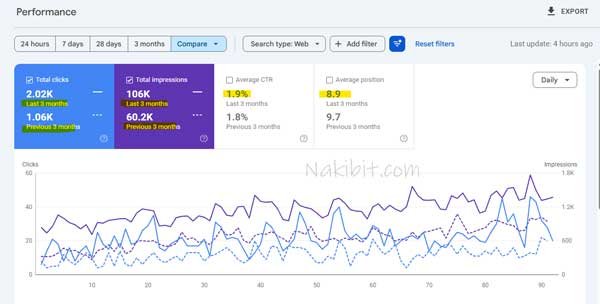
Technical SEO, keyword targeting, topical authority, internal links, backlinks and AI search optimisation, last three months compared with the three before.
 AI search
Luxury bags, Spain
Entity and content work that put the brand into Google AI Overviews and ChatGPT responses.
Great pages still need to be crawled and indexed, which is where technical SEO comes in. Each page also needs the right title, headings and links, covered under on-page SEO.
To help your best content beat similar pages, link building adds the outside signals. And if you are not sure what to fix first, start with an SEO audit.
Content also works differently by business type. A local business benefits from pages built around its area and services, which I handle in local SEO. A shop needs category and product copy that sells, which sits under ecommerce SEO. Whatever your model, I can act as your content SEO consultant, a freelance SEO expert working alongside your team or a dedicated partner for the whole programme.
Whether you hire a content SEO company, a content SEO agency or an independent specialist, ask the same questions. Can they show real results, with the numbers and the method? Do they start from search intent and your customers, or from a template? Will they write in a human voice, or hand you generic copy? Do they explain their decisions in plain language?
Be cautious of anyone who promises a ranking, sells content by volume or cannot say who will write your pages. Good content programmes are slow to build and quick to compound, so honest timelines matter.
At Nakib IT, you work with me directly. I am a results-driven SEO expert and an experienced content SEO consultant, and I will tell you plainly when content is not your biggest problem. Sometimes a technical fault or a weak offer needs fixing first. If you want to compare options more broadly, read about how I work as an SEO consultant or visit my professional SEO services page, and head back to the Nakib IT home page for the full picture.
My approach is semantic as well as technical: I map the questions people ask, group them into topics and give each topic one strong page. As a holistic SEO expert, I then check that speed, structure, links and reviews support that page. Where your site has many similar pages, such as products, locations or listings, a programmatic SEO expert approach can help: templates fed by real data, unique value on every page and strict quality checks so nothing turns thin or duplicate. I only recommend it when the data and the demand are really there.
I aim to be a trusted SEO consultant, not just a supplier: I explain every recommendation, show you the data behind it and tell you when SEO is not the right next step.
Useful background: what topical authority is and how to build it, what information gain means for SEO and the basics of keyword research. To see every service in one place, return to the SEO expert in Bangladesh home page.
Send me your site and I will tell you which pages to refresh, which to merge and which topics are missing.
No obligation · Reply from Nazirul Islam Nakib himself
 Nazirul Islam Nakib
We usually reply in a few minutes
Leave your email or WhatsApp number and we'll follow up as soon as we're back online.