Organization and Person
Who you are, where to find you and which profiles belong to you, so your brand is one clear entity.
I am Nazirul Islam Nakib, a proven schema markup expert and technical SEO specialist. Structured data is a plain-language label on your page: this is a business, this is a service, this is its author. I add markup that matches what visitors can see, validate it, and keep it consistent across the site, so machines read your pages correctly.
4.9/5 from 81 reviews · Validated against Google’s guidelines

Get a free first look
Send your website. I will reply myself with what I see and what I would fix first.
or
Chat on WhatsAppSchema markup is code, usually JSON-LD, that describes a page’s content in a format search engines and AI systems can read without guessing. It can say that a page is an article written by a named person, that a business offers a particular service, that a page is a product with a price, or where a page sits in your site structure.
It does not guarantee a ranking and I never promise one. What it does is remove ambiguity. That matters more now that AI assistants decide which sources to cite, because a clearly described entity is easier to trust and quote.
The rule I work by is simple: markup must describe what is really on the page. Inventing reviews, ratings or facts to chase a rich result puts a site at risk. Good markup is part of technical SEO and supports AI SEO.
Search engines read text well, but text can be ambiguous. Is Apple a fruit or a company? Is a page about a person or written by one? Structured data answers these questions in a format built for machines. Google supports JSON-LD, Microdata and RDFa, and recommends JSON-LD, which sits in one block of code apart from the visible page.
For Google, valid markup can make a page eligible for rich results such as product details, breadcrumbs, reviews and events. Google is clear that correct markup enables a feature but does not guarantee it will appear. That is why I never promise a rich result. What I promise is correct, honest markup.
For AI search, the value is clarity. Assistants such as ChatGPT, Gemini and Perplexity build answers from many sources, and a business that is described clearly and consistently is easier to recognise and quote. As a professional SEO expert and AI search specialist with more than eight years of experience and 1,200+ projects, I treat schema as one part of making your brand a clear entity, alongside your content and your mentions elsewhere. It is not magic, and it works best on a site that is already well built.
If you want to see where schema sits in the whole picture, read about my technical SEO work or visit the Nakib IT home page.
Who you are, where to find you and which profiles belong to you, so your brand is one clear entity.
What you offer and where, matched to the visible service page.
Named authors with credentials, publish dates and topics, which supports trust signals.
Your page hierarchy, shown clearly in results and understood by crawlers.
Price, availability and details for stores, kept in step with the product page.
Used where it is accurate and useful. Google now shows these rarely, so I add them only when they help readers or AI tools.
Different sites need different markup. A local business needs LocalBusiness or a more specific type, with name, address, phone number, opening hours, service area and links to its profiles. These details should match your Google Business Profile exactly. I explain the local side in local SEO.
An online store needs Product markup with price, availability and, where real, review data, plus Organization details and breadcrumbs. Prices in the markup must match the price on the page, and stale data is a common fault. See ecommerce SEO for the wider work.
A software company benefits from Organization, SoftwareApplication where it fits, Article and author markup on the blog, and clear links between the company, its founders and its profiles. Publishers and agencies need Article, author and Person markup that shows who wrote what and why they are qualified.
In every case I start from the visible page, not from a template. If the page does not show a review, the markup does not claim one. If a service is not offered, it does not appear. Google's guidelines say markup must reflect content users can see, and that fake reviews or misleading markup can lead to a manual action, so I keep to that rule without exception.
Most sites already have some structured data, usually from a theme or an SEO plugin. The trouble is that several sources often add overlapping markup, and no one checks it. Typical faults include duplicate Organization blocks with different names, Product markup with no price, review ratings copied onto pages that show no reviews, and FAQ markup on pages where the questions are not visible.
Other problems are quieter. Markup may point to an old logo or an old phone number. A site may describe itself as a LocalBusiness while having no public address. Authors may be named in schema but missing from the page. Breadcrumb markup may not match the real navigation. Each of these weakens the clear picture you want search engines and AI tools to build.
My fix is to remove the noise first, decide what each template should state, and then write one clean version. After that I test pages with Google's Rich Results Test and the URL Inspection tool, and keep watching the enhancement reports in Search Console for errors that appear later, for example after a theme update. A full SEO audit can include a complete schema review if you want it alongside everything else.
On WordPress, I usually start with a trusted SEO plugin for the base layer, then correct its settings and add custom JSON-LD where the defaults fall short. The common fix is to stop two plugins from outputting the same type twice. I explain the platform side in WordPress SEO.
On Shopify and other store platforms, themes often include basic Product markup. I check it against the real price and stock status and add the missing pieces, such as shipping details or organisation data, without breaking the theme. See Shopify SEO for more.
On custom and JavaScript sites, markup is generated from templates. I write the template logic once, so every new page inherits correct data, and I check that the markup appears in the rendered page that Google sees. Developers receive clear instructions and example output, so the work does not depend on guesswork.
As your schema markup consultant, I hand over a short document at the end: which types sit on which templates, what fields feed them and what to check after a theme update. That way the work stays correct after I am gone.
A short checklist I walk through with every client.
Themes and plugins may already add markup, sometimes twice.
Reviews, prices, authors and services must be visible to visitors.
Add only the types that describe real content and serve readers or machines.
Business name, address, phone and profiles must match across the web.
Themes and plugins change, so markup needs a regular look in Search Console.
Crawlable, fast pages with useful content come first.
Local businesses gain from accurate business and service data, which supports their map and AI visibility. Online stores gain from clean product data. Publishers, agencies and consultants gain from clear author and organisation markup that builds trust. Software companies gain from consistent entity data across their site and profiles.
If you run a small brochure site with a handful of pages, you may need only a clean Organization or LocalBusiness block and breadcrumbs. If you run a large store or a content library, the work is bigger and the templates matter more. I scope accordingly and tell you honestly when a simple setup is enough.
Whichever you are, the order is the same: sound pages first, markup second. I will say so if your time is better spent elsewhere.
Honest advice is part of the job. Schema markup will not fix thin content, a slow site or a lack of authority. It will not put a missing page on the first page of Google. It will not force Google to show stars or other rich results, and it will not make an AI assistant mention your brand.
Google has also reduced the rich results it shows for some types, such as FAQ and how-to, so adding those everywhere no longer makes sense. I add each type where it describes real content and helps readers or machines, and I leave out the rest.
What schema can do is make correct information easy to find and hard to misread. For a business that depends on being described accurately, that is worth doing well. Combined with strong pages, a healthy technical base and steady content work, it supports everything else.
AI search tools try to understand entities: a business, a person, a product and how they relate. Schema is one way to state those facts. Your own content and your presence on trusted sites are the others. When they agree, the entity is clear. When they conflict, machines hesitate.
I therefore plan schema alongside the rest of the entity picture. Your company name, founder, services, locations and profiles are written the same way in the markup, on the About page, in your social profiles and in directory listings. Authors have their own pages with qualifications. Key facts are stated in plain sentences as well as in code. I cover this thinking in more depth in my work on answer engine optimization and generative engine optimization.
One honest note: no one can promise a mention in an AI answer. A clearer entity simply gives you a better chance of being understood correctly.
If you are looking for a schema markup agency, a schema markup company or a freelance structured data consultant, check a few things. Do they write and test the code by hand, or just switch on a plugin? Do they match the markup to the visible page? Do they explain what is not worth adding? Do they promise rich results or rankings?
At Nakib IT, you work with me directly. I am a trusted SEO expert and technical SEO consultant, and I will tell you plainly where schema helps and where it does not. To see my other work, browse my professional SEO services, see how to hire an SEO consultant or return to the home page.
Plugins and themes often add overlapping or broken markup. I check what is live today.
One consistent description of your business, authors and pages, linked together.
Hand-checked JSON-LD for each template, matched to visible content.
Tested in Google’s tools and a schema validator, with errors and warnings cleared.
Search Console enhancement reports show whether Google reads it correctly.
 AI search
Luxury bags, Spain
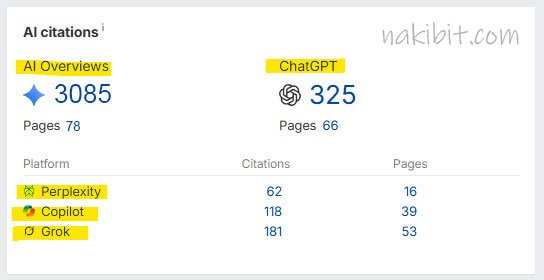
Entity and structured-data work that put the brand into Google AI Overviews and ChatGPT.
Markup supports good pages, it does not replace them. Pair it with sound on-page SEO and well-structured content SEO. If you are changing platform, include it in your site migration checklist, since themes often drop it.
Think of me as a semantic SEO expert and a holistic SEO consultant in one: I look at meaning, through topics and entities, and at the whole site, through technical health, content and authority, before I suggest any change. I am an independent SEO consultant and freelance SEO expert, so the person who audits your site is the person who fixes it. You can work with me remotely from anywhere, and I explain each step in plain language.
As an expert SEO consultant, I would rather give you a smaller, honest plan than a big one full of filler. You see what I will do, why it matters and how we will check that it worked.
Read the practical entity-graphing guide to schema markup for AI search and how to implement entity-based SEO. For every service in one place, go back to the SEO expert in Bangladesh home page.
Send me a URL. I will tell you what markup it has, what is wrong and what is missing.
No obligation · Reply from Nazirul Islam Nakib himself
 Nazirul Islam Nakib
We usually reply in a few minutes
Leave your email or WhatsApp number and we'll follow up as soon as we're back online.