Entity and brand consistency
One clear description of who you are, repeated accurately across the web.
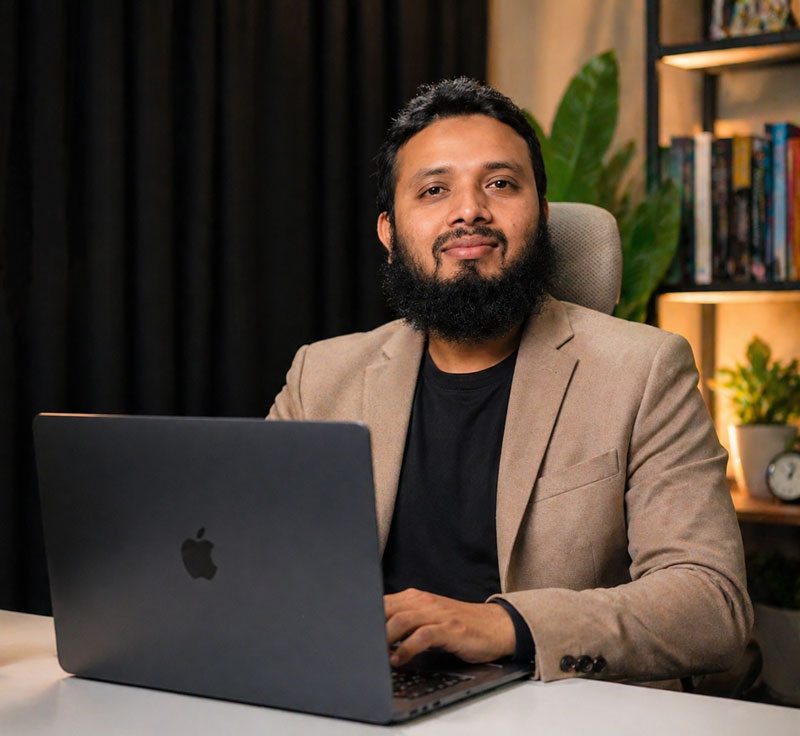
I am Nazirul Islam Nakib, an independent SEO expert working as a generative engine optimization expert and GEO expert. Language models do not rank pages. They form an impression of who you are from everything they can find, then repeat it. I work on that impression: consistent facts, clear entities, credible mentions and content that gives a model something solid to quote.
4.9/5 from 81 reviews · 325 ChatGPT appearances on one client project
Get a free first look
Send your website. I will reply myself with what I see and what I would fix first.
or
Chat on WhatsAppGenerative engine optimization, or GEO, is about how generative AI systems describe and recommend your business. Where classic SEO fights for a position in a list, GEO works toward being part of the answer.
A model builds its picture from many places: your site, your profiles, directories, reviews, press, other people's articles. When those sources agree and are easy to read, the model is confident. When they conflict, or say little, you are skipped for a brand that is clearer.
So I audit how your brand is described, then fix the weak points. That means consistent names, descriptions and facts, a clear about layer on your site, structured data that spells out who you are, content that holds real evidence, and mentions from sources a model is likely to trust.
It rests on the same base as everything else: pages that can be crawled (technical SEO) and content worth citing (content SEO).
One clear description of who you are, repeated accurately across the web.
Organization, Person, Service and Article markup that spells out the facts.
Earning coverage and references from sources that models and people trust.
Original data, clear definitions and expert comment that give models something to quote.
Named experts with visible credentials behind the content.
Regular checks of how major AI tools describe you and your competitors.
 AI search
Luxury bags, Spain
Entity and content work that put the brand into Google AI Overviews and ChatGPT responses.
I put your buyers’ questions to the main AI tools and record how you are described.
Where facts are missing, wrong or inconsistent across sources.
Site, profiles and structured data are corrected and aligned.
Relevant, credible sources are approached through honest outreach.
The same questions are asked again on a schedule and the changes are reported.
GEO is the brand-level layer. Answer engine optimization works on individual pages, ChatGPT SEO and Google AI Overviews deal with specific platforms, and the AI visibility audit is the best place to start. Outside mentions are built through ethical link building, and the overall approach is on my AI SEO services page.
My approach is semantic as well as technical: I map the questions people ask, group them into topics and give each topic one strong page. As a holistic SEO expert, I then check that speed, structure, links and reviews support that page. As a senior SEO specialist with 8+ years and 1,200+ projects behind me, I have seen most of the problems a site like yours can have, and I will tell you plainly which ones matter.
I aim to be a trusted SEO consultant, not just a supplier: I explain every recommendation, show you the data behind it and tell you when SEO is not the right next step.
The starting point of my work as a generative engine optimization expert is a simple question: if a model were asked about your business today, what would it say, and would it be right? I ask several AI tools that question in different forms, and I record the descriptions, the competitors named and the sources used. This tells me whether your problem is invisibility, inaccuracy or competition.
Invisibility means the models have little to go on. The fix is to create a clear, findable body of information: a strong About page, clear service pages, complete profiles, named authors and a few quality mentions. Inaccuracy means they have conflicting or outdated information. The fix is to correct your own sources first and then the third-party ones you can influence. Competition means other brands are described better. The fix is to give models stronger, more specific material to work with.
As a generative engine optimization expert, I then decide where to spend effort. Your own site comes first because you control it. Then profiles and directories, then third-party mentions, which take the longest. I also decide which pages should carry original, quotable material, such as a method you use, a data point from a real project or a clear definition of a service.
Every step has a way to check it. I do not claim a change worked unless the answers show it, and I will tell you when the answers do not move.
These terms overlap in practice, so it helps to separate them. Generative engine optimization is the brand-level work: how generative systems understand and describe your business, and whether they cite you when they write an answer. Answer engine optimization is the page-level work: shaping a page so a short passage can be lifted as the direct answer in a search box or assistant. AI SEO is the umbrella above both, and it also covers technical access and platform-specific steps.
If you want the page-level work, read how I handle answer-focused page structure. If you want the overview of all of it, start with my AI SEO overview. This page stays on the brand and entity layer so the three do not repeat each other.
Keeping them separate also helps with planning. Page-level work can show results quickly on specific questions. Brand-level work moves slowly, because it depends on what other sources say about you and how often. Both are worth doing, and they support each other.
A model is more likely to repeat a fact it has seen several times in agreement. So I audit how your business is described everywhere: its legal and trading name, what it does, where it works, who runs it, when it started, how to contact it and which categories it belongs to. I look for differences between your website, social profiles, directory listings, review sites and any press coverage.
Small differences matter more than owners expect. A business that calls itself an agency on one site, a consultancy on another and a freelancer on a third gives a model no clear label. A firm whose address differs between listings creates doubt. I choose one description and one set of facts, and I correct what I can control.
A generative engine optimization expert also looks at the people. A named expert with a visible biography, a consistent photo, a real profile and a track record is easier for a system to treat as a real entity. That is why author boxes, about pages and profile links get attention in my work.
Where it helps, I add structured data that states these facts in a form machines can read, using schema markup that matches the visible page. Structured data is not a magic switch. It is a way to state clearly what the page already says.
Models learn from what the web says about you, not only from what you say about yourself. So third-party mentions matter. I look for the honest places where a business like yours should appear: industry directories, professional bodies, relevant publications, partner pages, podcasts and local business sites.
I do not buy low-quality links or invent mentions, because that tends to hurt trust and is a poor foundation for any strategy. I use outreach that offers something real: an expert comment, a case study, a data point or a useful guide. This overlaps with ethical link building, but the aim is a little different. Beyond the link itself, I care about how your business is described in the text around it.
Reviews count as well. Real customer reviews on trusted platforms add specific language about what you do and how well you do it. I encourage honest collection and never suggest fake or incentivised reviews that break the platform rules.
All of this is slow, and I say so at the start. Mentions build over months. Treat them as an investment that also helps search rankings and referral traffic, not only AI answers.
No one can promise a place in a generated answer. The systems vary, they change often and they do not publish how they weigh sources. A generative engine optimization specialist who guarantees citations is either guessing or selling.
Training data is another limit. A model's built-in knowledge reflects a past snapshot, and you cannot edit it. What you can influence is what systems find when they search the web at the time of a question, and what the web says about you over time.
Google has published guidance on its AI features that is worth keeping in mind. It says that no special markup or AI-specific file is needed to appear, and that standard SEO fundamentals apply. That is a useful reminder: much of GEO is good SEO and good brand hygiene done carefully, not a secret technique.
On the evidence side, I have one project to show: a luxury bag brand in Spain, with 3,085 Google AI Overview appearances and 325 ChatGPT appearances. It is a real result, and it is one project. Please treat it as an example of what the method can do, not a forecast for yours.
I use a fixed list of questions and re-ask them on a schedule across several AI tools. For each answer I record whether you are named, how you are described, whether it is accurate, which sources are cited and who else appears. Over several runs, I look for patterns: do descriptions get more accurate, do you appear for more questions, do your pages get cited more often?
I also watch search data. Branded searches often rise when brand awareness grows, and they are a useful companion measure. For Google features, I check Search Console, where Google says AI Overviews and AI Mode traffic is counted under the Web search type.
You receive a report with the questions, the answers, what changed and what I did, so you can see cause and effect and re-run the test yourself. If you want to try it first, my guide to tracking AI search visibility explains a simple method.
GEO matters most when your business is easy to confuse with others, when you work in a field where buyers ask an assistant for names, or when your brand is newer than your competitors. A model that knows little about you will favour an established name. A clear, consistent footprint is how a smaller brand gives it something to use.
It also matters when wrong information already exists. An old address, a closed service line or a former name that still appears on directories can keep appearing in generated answers. Fixing the sources is slow, but it is the only dependable way to fix the answer.
If you are a very small local business with few online mentions, the first steps are often basic: complete your Google Business Profile, collect honest reviews and make your website state the facts clearly. I will tell you where you stand after reviewing your presence, and I will not sell advanced work you do not yet need.
Ask whether the provider starts with your entity facts and your own site, or with a tool subscription. Ask them to explain the difference between GEO and AEO in plain words. Ask what they would refuse to promise. A trustworthy generative engine optimization specialist, LLM SEO specialist or AEO expert answers these without hype.
I work as an independent consultant, so you deal with me from first review to final report. The best overview of my work is on the Nakib IT home page, and I can answer questions directly if you contact a proven SEO expert in Bangladesh with your website and a few customer questions. If you want to see where your brand stands first, the AI visibility audit gives you a clear picture.
Read what generative engine optimization is and why SEO and GEO both matter.
Send me your brand name and website. I will ask the main AI tools about you and tell you what they get right and wrong.
No obligation · Reply from Nazirul Islam Nakib himself
 Nazirul Islam Nakib
We usually reply in a few minutes
Leave your email or WhatsApp number and we'll follow up as soon as we're back online.