A technical SEO case study for a Russian-language travel booking website serving the German market: clicks up about 91% and AI-feature impressions up about 152% since the work began on 12 August 2026.
This SEO case study for a travel booking website in Germany shows clicks up about 91% and impressions up about 76% in the last three months compared with the three months before, after I started fixing its technical problems on 12 August 2026. The niche is highly competitive, and the work is still running.
I’m Nazirul Islam Nakib, an SEO specialist in Dhaka. I do this work myself through Nakib IT. The client’s name and website are kept private.
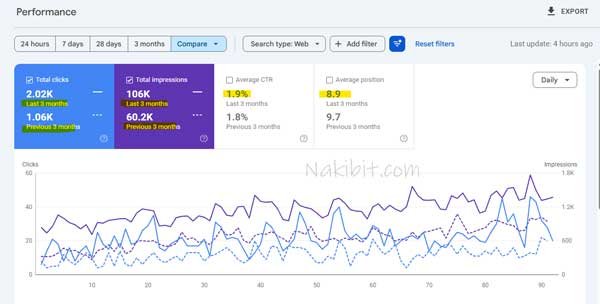
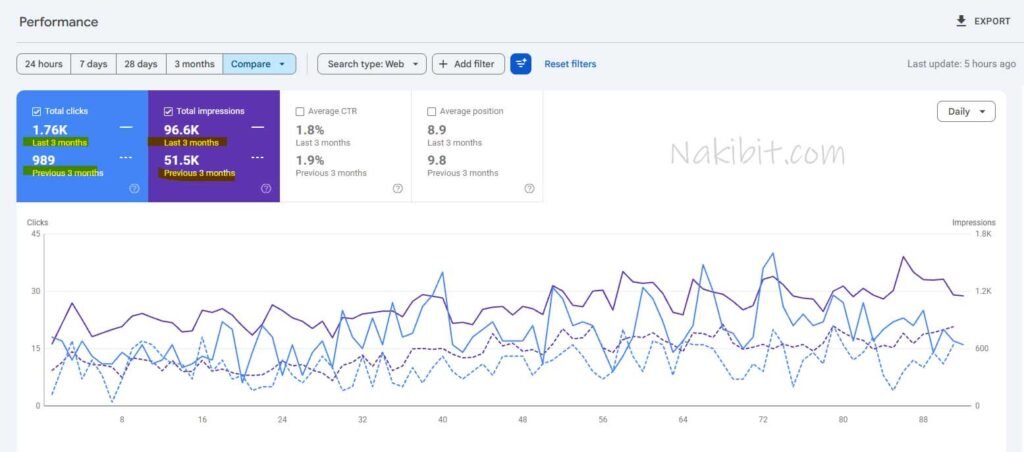
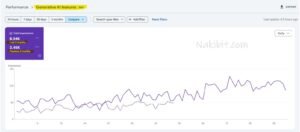
Earlier snapshot from Google Search Console (web search), taken in the first weeks of the project. The latest numbers are in the table below.
Data source: the client’s own Google Search Console, web search
The result at a glance
Metric
Previous 3 months
Last 3 months
Change
Total clicks
1.06K
2.02K
about +91%
Total impressions
60.2K
106K
about +76%
Average CTR
1.8%
1.9%
about the same
Average position
9.7
8.9
0.8 places higher
AI features impressions
3.7K
9.33K
about +152%
Percentages are worked out from the rounded numbers Search Console shows, so treat them as “about”.
The starting point: a competitive niche and many technical problems
When I joined on 12 August 2026, the site already had some visibility, but it carried a lot of technical problems. It also sits in a very competitive niche, where established booking platforms and many other sites fight for the same searches. In a market like this, an average position near 10 is a hard-won place, and each step up takes steady work.
Search engines have to crawl, render and index a page before it can rank, so technical faults quietly cap everything else. A travel booking site makes this harder: it has many hotel, location and treatment pages, a search form, several currencies and more than one language.
I started by finding what was holding the site back, then fixed the most important issues first. I am still fixing others. I am not listing each fix here, because some are still in progress and the client’s setup is private.
What I worked on
Technical SEO. Crawling, indexing, page speed and site structure, so search engines can reach and understand the pages that matter. This is the core of the project. See my technical SEO service.
Keyword targeting. In a competitive niche, guessing does not work. I matched each important page to the search terms real visitors use, so every page has one clear target and pages do not compete with each other.
Topical authority. I organised the content around the subjects the site should be known for, so each topic has depth and clear coverage instead of scattered pages. Read more about topical authority.
Internal linking. I rebuilt the internal links so related pages point to each other with clear anchors. This helps visitors move through the site and helps search engines find and understand the important pages.
Backlinks. I built backlinks to the site to add outside trust signals. I am not sharing the sources, because they would point to the client.
International and language targeting. The content is in Russian, but most visitors come from Germany. Getting language and market signals right matters for a site like this. See my international SEO service.
AI SEO. Clear page structure and direct answers help Google’s AI features understand and show the pages. See AI SEO.
Destination pages. Hotel and location pages are cleaned up so each one has a single, clear purpose. See local SEO.
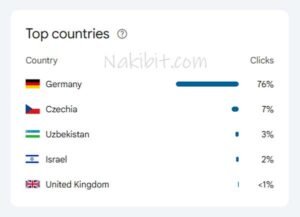
Where the traffic comes from
Country
Share of clicks
Germany
76%
Czechia
7%
Uzbekistan
3%
Israel
2%
United Kingdom
under 1%
Germany brings about three of every four clicks. The site is written in Russian, so its audience is Russian-speaking people living in Germany and nearby countries. That is a good example of why language and country are two separate signals in international SEO.
Visibility in Google’s AI features
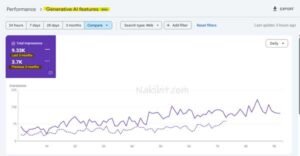
Earlier snapshot of the generative AI features report, taken in the first weeks of the project. The latest numbers are in the text below.
Search Console has a beta report for Google’s generative AI features. An impression there means a link to the site was shown inside one of these AI features. Impressions rose from 3.7K to 9.33K, about +152%.
One caution: in the chart, the line for the earlier period covers fewer days than the last three months, so the two totals are not like for like. The direction is still clear, but treat the exact percentage with care.
What the numbers mean
More people saw the site. Impressions grew by about 76%.
More people clicked. Clicks almost doubled, from 1.06K to 2.02K.
Average position improved. It moved from 9.7 to 8.9, which puts the average inside the top 10 in a competitive niche.
CTR held steady. This is normal when impressions grow fast, because new searches often bring lower-ranked appearances.
How to read these numbers honestly
The “last 3 months” window includes roughly two weeks before I started on 12 August 2026, so not all of the growth period is mine.
Several changes ran together (technical fixes, keyword targeting, topical structure, internal links and backlinks), so I cannot say how much each one contributed.
The work is still running, and many technical fixes are not finished.
Percentages come from rounded Search Console numbers.
Seasonality can affect travel searches, so I will keep tracking and update this page.
What I learned so far
Fix the foundation first. On a site with many technical issues, cleaning up crawling and indexing often does more than publishing new content.
Competitive niches reward focus. One clear keyword target per page, backed by depth and good internal links, beats trying to rank everything for everything.
Structure and links work together. Topical authority, clean internal linking and backlinks support each other: one shows depth, one guides crawlers, one adds outside trust.
Language is not the same as country. A Russian-language site can earn most of its clicks in Germany, so targeting has to follow the real audience.
AI visibility grows with clarity. Clean structure helps both classic results and AI features.
One site is not a promise. These results are for this site only. Yours depends on your market, competitors and starting point.
Frequently asked questions
When did the work start?
On 12 August 2026. The project is still running, so this is a snapshot, not a final result.
Can SEO work in a very competitive niche?
Yes, but it takes patience and a clear plan. In this project, fixing technical problems, targeting keywords carefully, building topical depth, linking internally and earning backlinks moved the site up on average while the niche stayed crowded.
Does technical SEO alone grow traffic?
It removes the barriers that stop good pages from being crawled, indexed and shown. Here it worked together with keyword targeting, topical authority, internal linking and backlinks.
Can you work on sites in other languages?
Yes. I work with businesses in 21+ countries. See my international SEO work.
Can you promise the same growth for my site?
No. I can promise a clear plan, honest reporting and white-hat methods.
Why is the client not named?
I protect client privacy. The numbers are real and come from the client’s Search Console.

 Search Console has a beta report for Google’s generative AI features. An impression there means a link to the site was shown inside one of these AI features. Impressions rose from 3.7K to 9.33K, about +152%.
One caution: in the chart, the line for the earlier period covers fewer days than the last three months, so the two totals are not like for like. The direction is still clear, but treat the exact percentage with care.