


Starting an online store is an exciting venture for any small business. But with so many options available, choosing the right foundation for your digital shop can feel overwhelming. The decision you make will impact everything from your day-to-day operations to your future growth. This guide will walk you through everything you need to know to select the Best eCommerce Platform for Small Business, setting you up for success in the ever-growing online marketplace.
Your ecommerce platform is more than just a tool to list products; it’s the heart of your online business. It’s where you’ll manage inventory, process payments, interact with customers, and build your brand. The right platform can streamline your workflow and help you scale, while the wrong one can create headaches and hinder your growth.
What is the Best eCommerce Platform for Small Business?
The truth is, there’s no single “best” platform for every small business. The ideal choice depends on your specific needs, budget, technical skills, and business goals. To help you make an informed decision, let’s break down the key factors to consider.
Key Factors in Choosing an eCommerce Platform
Before you start comparing platforms, it’s important to understand what makes a platform a good fit for a small business. Here are the most important aspects to evaluate:
| Feature | Importance for Small Business |
|---|---|
| Ease of Use | For small business owners who often wear many hats, a user-friendly platform with an intuitive interface is crucial. You want to be able to set up and manage your store without needing extensive technical knowledge. |
| Pricing and Budget | Your budget will play a significant role in your decision. Consider not only the monthly subscription fees but also transaction fees, theme costs, and the price of any necessary apps or plugins. |
| Scalability | Your business may be small now, but you want a platform that can grow with you. A scalable platform can handle an increase in products, customers, and traffic without a hitch. |
| Customization and Design | Your online store should reflect your brand’s unique identity. Look for a platform with a variety of customizable templates and themes to create a professional-looking website. |
| Payment Gateway Integration | You need a platform that integrates with multiple payment gateways to offer your customers a variety of secure and convenient payment options. |
| SEO & Marketing Tools | To attract customers, you need a platform with built-in marketing and search engine optimization (SEO) tools. This will help your store rank higher in search results and make it easier to run promotional campaigns. |
| Customer Support | When you run into a problem, you’ll want access to reliable and responsive customer support. Look for platforms that offer 24/7 support through various channels like phone, email, and live chat. |
A Closer Look at the Top eCommerce Platforms
Now that you know what to look for, let’s explore some of the most popular ecommerce platforms for small businesses.
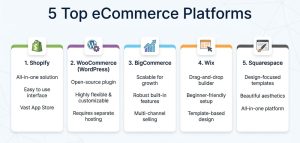
1. Shopify
Shopify for small businesses is often the first name that comes to mind, and for good reason. It’s a leading all-in-one ecommerce solution that’s known for its ease of use and comprehensive features.
- Pros: Shopify offers a user-friendly drag-and-drop interface, a wide selection of professional themes, and a massive app store with over 8,000 plugins to extend your store’s functionality. It also provides excellent 24/7 customer support and handles all the technical aspects of hosting and security for you.
- Cons: The monthly subscription fees and transaction fees (if you don’t use Shopify Payments) can add up. While highly customizable, some advanced design changes might require knowledge of Shopify’s coding language, Liquid.
2. WooCommerce (WordPress)
For those already familiar with WordPress, WooCommerce is a powerful and flexible open source ecommerce platform. It’s a free plugin that transforms your WordPress website into a fully functional online store.
- Pros: As an open-source platform, WooCommerce offers unlimited customization possibilities. You have complete control over your store’s design and functionality. There are also thousands of free and paid extensions available to add new features.
- Cons: While the plugin itself is free, you’ll need to pay for web hosting, a domain name, and potentially premium themes and plugins. It also has a steeper learning curve than hosted platforms like Shopify and requires more technical maintenance.
3. BigCommerce
BigCommerce is another top-tier saas ecommerce platform that’s particularly well-suited for businesses with large and complex inventories.
- Pros: BigCommerce boasts a robust set of built-in features, including advanced inventory management and SEO tools, with less reliance on apps compared to Shopify. It also offers strong multi-channel selling capabilities.
- Cons: While powerful, some users find its interface less intuitive than Shopify’s. The cost of their plans can also be a consideration for businesses on a tight budget.
4/5. Wix and Squarespace
Originally known as website builders, both Wix and Squarespace have evolved to offer robust ecommerce functionality, making them excellent choices for creative entrepreneurs and visually-driven businesses.
Pros: Both platforms are renowned for their stunning, professionally designed templates and easy-to-use drag-and-drop editors. They offer an all-in-one solution with hosting, security, and customer support included.
Cons: While their ecommerce features have improved, they may not be as extensive as dedicated platforms like Shopify or BigCommerce, especially for larger or more complex stores.
Understanding Different Types of eCommerce Platforms
As you explore your options, you’ll come across different types of ecommerce platforms. Here’s a simple breakdown:
SaaS (Software-as-a-Service) eCommerce Platform
SaaS platforms, like Shopify and BigCommerce, are hosted solutions where you pay a monthly fee for access to the software. The provider takes care of all the technical maintenance, security, and updates, making it a hassle-free option for beginners.
Open-Source eCommerce Platform
Open-source platforms, like WooCommerce and Magento, give you the source code to modify and customize as you see fit. This provides ultimate flexibility but also requires more technical expertise and self-management of hosting, security, and updates.
Headless eCommerce Platform
A headless ecommerce platform is a more advanced architecture where the front-end (the “head” or what the customer sees) is separated from the back-end (the ecommerce functionality).
This allows for unparalleled flexibility and customization, enabling you to deliver unique customer experiences across various channels like websites, mobile apps, and IoT devices. While powerful, this approach is typically more complex and better suited for businesses with development resources.
B2B vs. B2C eCommerce Platforms
It’s also important to consider your business model:
1. B2C (Business-to-Consumer) eCommerce Platform: These platforms are designed for selling directly to individual customers. Most of the platforms discussed above, like Shopify and WooCommerce, are excellent for B2C businesses.
2. B2B (Business-to-Business) eCommerce Platform: If you sell to other businesses, you’ll need a platform with specific B2B features like custom pricing, bulk ordering, and wholesale capabilities. Platforms like Shopify Plus, BigCommerce, and OroCommerce are strong contenders in the B2B space.
The Importance of an eCommerce Platform for SEO
Choosing an eCommerce platform for SEO is crucial for driving organic traffic to your store. A good platform should offer:
- Customizable URLs, meta titles, and descriptions
- A built-in blogging platform for content marketing
- Mobile-responsive themes
- Fast loading speeds
- Automatic XML sitemap generation
Shopify, BigCommerce, and WooCommerce are all considered to be strong choices for SEO.
Launching Your Small Business Online Shop
Once you’ve chosen your platform, you’re ready to build your small business online shop. Here are a few tips for success:
- Create high-quality product photos and descriptions.
- Offer a seamless and secure checkout process.
- Provide excellent customer service.
- Market your store through social media, email marketing, and other channels.
- Analyze your store’s data to make informed business decisions.
Creating successful small business ecommerce websites requires a combination of the right tools and a solid strategy.
Conclusion: The Best Platform for Your Small Business
Ultimately, the best eCommerce platform for small business is the one that aligns with your unique needs and helps you achieve your goals. For those seeking simplicity and an all-in-one solution, Shopify for small businesses is an excellent choice. If you’re a WordPress user who wants maximum flexibility, WooCommerce is a fantastic option. And for businesses with an eye on rapid growth and scalability, BigCommerce is a powerful contender.
Take the time to research your options, take advantage of free trials, and choose a platform that you’re comfortable and confident with. With the right ecommerce platform as your foundation, you’ll be well on your way to building a thriving online business.